Compost maturity
Aged manure is not necessarily fully composted. Ask how the material was processed and for maturity or stability evidence from the offered lot.
Agricultural soil input · Buyer-defined lot
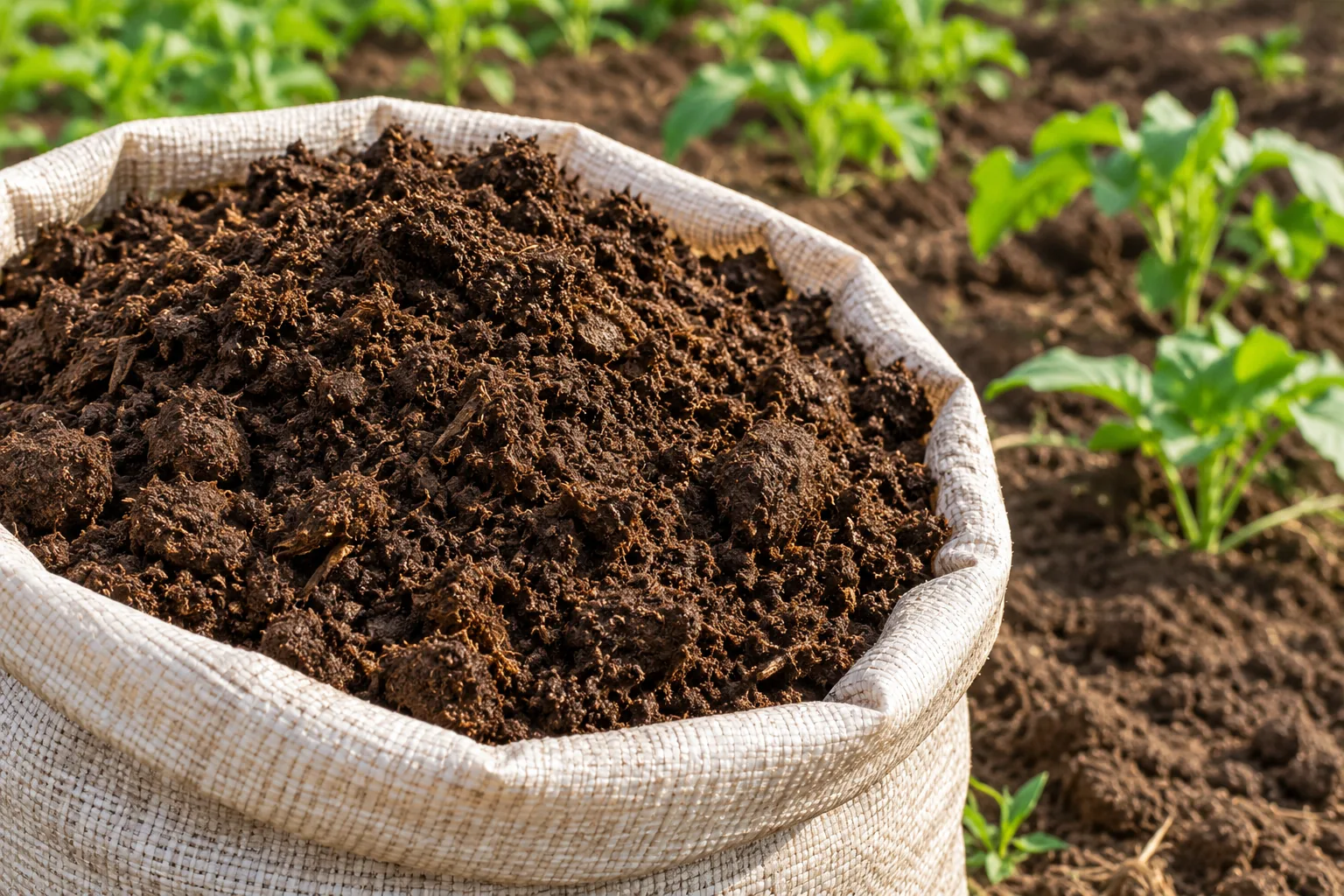
Cow dung compost is a soil amendment used in farming and horticulture. Tell us your application, specification and quantity so we can check a particular source and its test evidence. The image is illustrative, not a photo of stock.
Farm buyer guide
Aged manure is not necessarily fully composted. Ask how the material was processed and for maturity or stability evidence from the offered lot.
Request a representative nutrient and salt analysis. Compare it with your soil test and crop needs; neither NPK nor a safe application rate is universal.
Specify where the material will be used or imported. Check the destination's current animal-origin input rules and required documents before discussing dispatch.
Further reading: University of Minnesota on aged versus composted manure, manure testing and nutrient analysis, and DGFT destination-specific export conditions. These references do not certify a particular lot.
Government rules and lot evidence
The answer depends on the product's legal category and destination. We do not claim that an untested lot meets every government standard.
Confirm the applicable FCO category and current Schedule IV specification, the source or manufacturer's relevant authorisation, and required label and packing. Compare a lot-linked laboratory report with the actual limits; a generic NPK claim or company registration is not proof of product compliance.
Confirm the precise ITC-HS classification and policy at dispatch. Chapter 31 lists animal dung at 31010091, but a tariff code alone does not approve a shipment. For exports to the EU, the policy lists additional consignment-wise CAPEXIL shipment clearance and health-certificate conditions.
Ask the importer to confirm any product registration, import permit, animal-health or quarantine rules, test limits, labels and documents required at the destination before a firm FOB or CIF offer.
Official sources: Fertiliser Control Order 1985 (check amendments) and DGFT Chapter 31 policy. These references are a buyer checklist, not certification of a current lot.
Farm soil input specification
A useful compost quote needs more than a photo or an advertised NPK number. State the crop, soil purpose, quantity and test limits; we check the specific source, maturity evidence and available lab report before offering material.
We do not claim that every cattle-manure compost is certified organic, pathogen-free or export-approved. Approval depends on the tested lot and the destination.
| Buying detail | Supply basis |
|---|---|
| Material | Cattle-manure-based compost; source and composition confirmed per offered lot |
| Use | Farm, orchard or nursery soil amendment; application rate determined from soil and crop needs |
| Maturity | Composting process and stability evidence requested from the source before an offer |
| Analysis | Ask for lot-specific moisture, organic carbon, N-P-K, pH, electrical conductivity and C:N ratio |
| Safety | Buyer-defined pathogen and contaminant testing, including heavy metals where applicable |
| Form | Screened or unscreened material only if the available source matches the requirement |
| Packing | Bag size, lining, palletisation or bulk format agreed before quotation |
| Supply basis | Availability, transport and destination import eligibility checked before commercial commitment |
Procurement workflow
You specify the crop, soil need, application plan, quantity and receiving location.
We check composition, maturity, available lab results and packing against your written limits.
Transport, documents and any destination import conditions are verified before a dated offer.
Buyer questions
No. Fresh manure has not completed composting. Request process and maturity evidence for the specific lot rather than assuming aged manure is fully composted.
There is no honest universal NPK figure. Nutrients and salts vary with feed, bedding, handling and processing; ask for a representative laboratory report for the offered lot.
Composted manure can be considered as a soil amendment, but the dose and timing should follow a soil test, crop plan and food-safety requirements. We do not prescribe a universal rate.
That depends on the material, HS classification and destination rules. We check eligibility and required certificates for the named country before promising shipment.
Commercial enquiry
Send your crop use, quantity, test limits, packing and destination. We review the source, lot evidence and shipping rules before a dated offer.
Request quote on WhatsApp